
There Is a Stage Before the Transaction.
In many cases, financial guidance arrives after a decision has been made. A property is listed. A buyer is found. A closing date is set. By the time advisors are involved, the questions that mattered most may already be answered — without the structure they deserved.
There is an earlier stage. It begins when an investor first asks whether to sell, and it ends when a transaction is finalized. This is the Pre-Sale Planning Stage, and it is where Xtramile Financial Group works.
The Pre-Sale Planning Stage
The Pre-Sale Planning Stage is the period when an investor is evaluating whether to sell a property — and considering how that decision fits into a broader financial picture. It can begin months, sometimes years, before a property is formally listed.
During this stage, investors typically work through questions like:
Should I sell this property now, or wait? How would a sale affect my long-term financial plan? What considerations should I review with my CPA? What reinvestment options might exist after a transaction? How does this decision interact with my estate plan?
These questions don’t have product answers. They have planning answers. And they are generally the most useful when they are asked early — while flexibility is still available.
The Pre-Sale Planning Stage is not a sales process. It does not presuppose a sale. Investors who work through this evaluation and decide to hold, or to wait, can generally benefit from a structured look at their situation. The value is in the quality of the decision, not its direction.
Although this work often centers on investment property, the same stage exists before any major liquidity event. The sale of a business, a concentrated equity position, or another significant financial transaction all share the same structure: a period when decisions are still flexible, advisors are useful, and outcomes are still being shaped. The framework that follows applies in each of those situations.
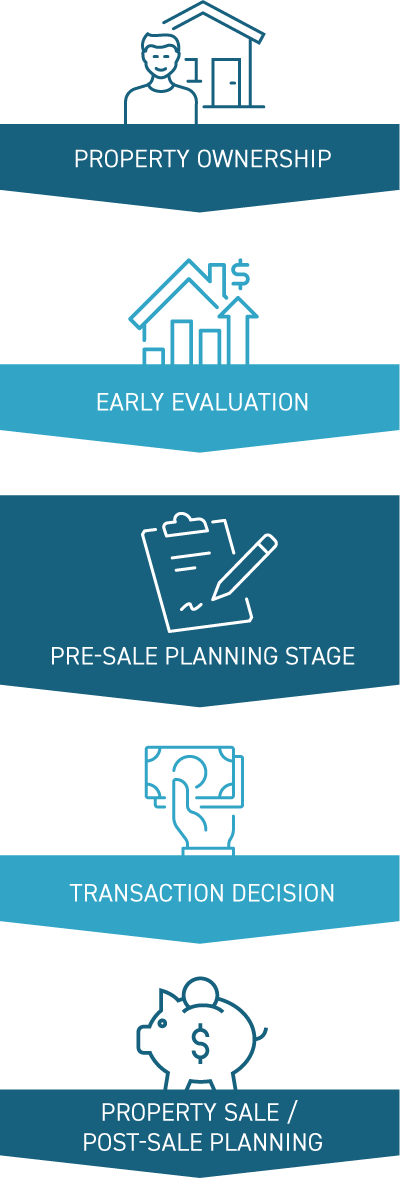
The Xtramile Pre-Sale Planning Framework
The framework Xtramile uses during this stage is built around three components. The Decision Timeline, shown above, locates where the planning work happens within the broader lifecycle of an investment. The Investor Decision Map, available as a downloadable guide, walks through the questions in sequence. And at the center of the framework are five pillars — the substantive areas of consideration that shape every Pre-Sale Planning conversation.
1.
Purpose of the Sale
Every sale begins with a reason. Simplification. A shift in strategy. A change in property performance. A liquidity need. A relocation. Clarifying the purpose is the first step, because purpose shapes every consideration that follows.
2.
Portfolio Impact
A property does not exist in isolation. It is part of a broader portfolio and a broader net-worth composition. Selling changes diversification, income, and concentration. Understanding how a property fits — and how a sale would change that fit — is foundational to the decision.
3.
Financial Considerations
This pillar is the most technical, and includes three sub-areas reviewed in coordination with an investor’s existing professionals.
Tax Considerations
Capital gains, depreciation recapture, and timing-related questions, reviewed with the investor’s CPA with permission.
Liquidity Planning
Estimated net proceeds and how added liquidity supports near-term and long-term financial goals.
Estate Considerations
Alignment with the investor’s estate plan and ownership structures, reviewed with investor’s legal counsel with permission.
4.
Reinvestment Considerations
Proceeds from a sale can take many directions: continued real estate investment, diversification into other asset classes, debt reduction, or support for broader financial goals.
5.
Advisor Coordination
Investors at this stage typically have a CPA, an attorney, a real estate broker, and a lender. Each professional sees part of the picture. Xtramile’s role is to help align decisions across them — so the recommendations the investor receives are consistent with one another, and with the investor’s broader plan.
Why This Stage Matters
By the time a transaction is finalized, consequential decisions have already been made. By engaging earlier — while questions are still open and outcomes are still flexible — investors have the benefit of structured thinking when it is most useful.
The Pre-Sale Planning Stage is also where coordination among existing advisors may help create value. Tax, legal, lending, and brokerage professionals all serve different roles. A coordinated planning perspective — across all of them, before any one of them is acting on a finalized decision — is what Xtramile aims to provide.
Where to Go From Here
If you’d like a structured walk-through of the questions to consider before selling, the Investor Decision Map is available as a downloadable guide.
For a more substantive treatment of the considerations involved, our guide Before You Sell Investment Property walks through each of the Five Pillars in greater depth.
If you’d like to discuss your own situation, an initial conversation carries no obligation and no fee.